
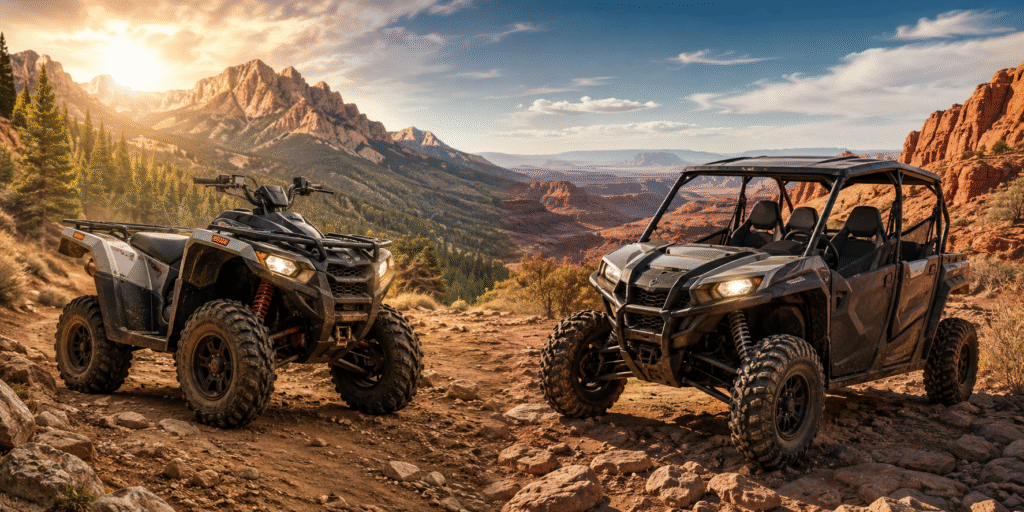
Utah is gorgeous, but it is not gentle on the wrong off-road machine. Red rock ledges, piney mountain roads, sand bowls, loose shale, and long dusty stretches can turn a fun day into a stiff-necked lesson pretty quickly. Choose well, and the ride feels natural. Choose poorly, and you may end up fighting the terrain, crowding your passengers, or discovering the trail does not allow your vehicle in the first place.
This guide keeps the decision practical. You’ll compare ride feel, safety, trail access, storage, cost, and real Utah conditions before you rent, book a tour, or buy. The goal is simple: help you choose the machine that fits your people, your plans, and your budget.
Choosing Between ATV and UTV for Utah Terrain
Before you get pulled into engine sizes, brand loyalty, or shiny accessories, think about how you’ll actually ride. Utah is wildly varied. One weekend might mean slickrock near Moab. Another might be a cool forest road above Heber. Your best choice depends on who is coming, how much gear you’ll carry, and how comfortable you want the day to feel.
Utility Task Vehicles hold 62% market share due to superior safety features, payload capacity, and versatility in commercial applications compared to traditional ATVs.
Key Differences Riders Feel Right Away
An ATV feels more like a motorcycle or dirt bike. You straddle the seat, steer with handlebars, and use your body to help control the machine. It feels active, quick, and personal.
A UTV, often called a side-by-side, drives more like a small off-road car. You get a steering wheel, bucket or bench seating, seat belts, and room for passengers.
When comparing ATV vs. UTV for Utah rides, the big difference is between control and capacity. ATVs give you a lighter, more physical experience. UTVs give you space, stability, and a more relaxed setup for families, coolers, tools, and longer trail days.
Utah Rules, Permits, and Trail Fit
Utah requires proper registration or permits for many off-highway vehicles. Rules can vary by county, road type, and riding area, so don’t assume a machine is street-legal just because you saw one cruising through town.
Trail width is another big deal. Some Utah ATV and UTV trails are tight enough that a wider side-by-side may not be allowed or practical. ATVs often fit narrow routes better, while UTVs are excellent on open desert roads, dunes, and longer backcountry loops.
| Utah Riding Need | ATV Fit | UTV Fit |
| Tight trails | Strong choice | May be limited |
| Family comfort | Limited | Strong choice |
| Gear hauling | Light loads | Better capacity |
| Low transport hassle | Easier | Needs more trailer space |
| Long group rides | Less ideal | Often better |
Once you understand seating, controls, size, and access, the choice starts to come into focus. Now let’s see how each machine handles Utah’s actual terrain.
Performance on Utah’s Rocks, Sand, and Forest Roads
Terrain is where the decision gets real. Utah is not one riding environment. It is several, often within a few hours of each other.
Rocky Climbs and Desert Dunes
Moab-style rock rewards patience, clearance, and careful line choice. ATVs can sneak through tighter ledges and give experienced riders a very connected feel. UTVs, though, bring extra stability and confidence when climbs get steep or passengers are along for the ride.
At Little Sahara, everything changes. Sand wants momentum, float, and balance. UTVs often feel planted and comfortable across open dunes. ATVs feel sharper and more playful, especially if you ride solo and like a livelier machine.
Mountain Routes and Mixed Conditions
In mountain areas near the Uinta-Wasatch-Cache National Forest, you might see dust, mud, shade, loose rock, and sudden weather all in one outing. ATVs are handy on narrow tracks and tight turns. UTVs are easier on your back and shoulders, especially late in the day when everyone is tired and hungry.
After you picture those rocks, dunes, and mountain roads, the next question becomes simple: what features will matter hour after hour?
Features That Matter for Utah Adventures
Trail access can make or break your plan before the engine even starts. Maneuverability is not just a preference in Utah. Sometimes it decides whether your vehicle belongs on the route at all. Choosing the best off-road vehicle for Utah adventures means matching the machine to the trail, not just picking the one that looks toughest in the driveway.
Maneuverability, Comfort, and Safety
ATVs are easier to load, unload, turn around, and guide through narrow spaces. That helps on older routes, rough switchbacks, and those awkward moments when you realize the trail ahead is not what the map made it look like.
UTVs answer with comfort and protection. Seat belts, roll cages, doors or nets, and side-by-side seating make them appealing for families and groups. Helmets are still important, of course. But many riders appreciate the more contained feeling of a UTV.
Tech, Storage, and Customization
Modern off-road machines can be set up with GPS, Bluetooth audio, winches, spare tires, radios, light bars, and storage upgrades. That might sound like bonus gear until you are miles from pavement and the weather gets moody.
The U.S. all-terrain vehicle market was valued at USD 1.59 billion in 2025 and is expected to reach USD 2.47 billion by 2035, at a CAGR of 4.45%.
Hunters, campers, photographers, and property owners often love the cargo bed on a UTV. Solo riders who pack light may prefer an ATV rack, a compact tool kit, and less bulk to haul around.
Once comfort, safety, and gear space are on the table, it’s time to weigh the trade-offs honestly.
Pros, Cons, and Real-World Trade-Offs
The real ATV vs UTV pros and cons depend on your group size, your riding style, and how much comfort you expect. There is no universal winner here. Annoying, maybe, but true.
Where ATVs Shine
ATVs are usually less expensive to buy, easier to tow, and simpler to store. If you ride alone and enjoy a more physical connection to the trail, an ATV can feel incredibly satisfying.
They also make sense when access is tight. If your routes include narrow trails or smaller trailheads, an ATV can keep the day simpler from start to finish.
Where UTVs Win
UTVs are tough to beat for group rides across Utah’s wide-open terrain. More seats, more cargo room, and better wind protection can make a long, dusty ride much more enjoyable for everyone.
Still, be honest about the downsides. UTVs cost more, require more trailer space, and may be restricted on narrow trails. If you only ride once in a while, that extra cost may sting.
Where Both Can Fall Short
Both machines need maintenance, quality tires, and responsible riders. Utah dust is hard on air filters. Rocks can punish suspension parts. A sudden storm can turn an easy route into something far less friendly.
Rules matter too. Stay on marked routes, respect closures, and avoid wet areas or soft shoulders that can be damaged for years. Nobody wants to be the reason a trail gets shut down.
At this point, the decision often shifts from “Which is better?” to “What can I afford to own and maintain?”
Cost, Rentals, and Local Buying Tips
Once you compare purchase price, maintenance, storage, transport, and resale value, buying may not always be the smartest first step. If you’re visiting Utah or trying a new riding style, renting can save money and prevent regret.
Buying, Financing, and Resale
ATVs usually win on lower upfront cost and easier transport. UTVs often hold strong appeal because families, landowners, and adventure groups all shop for them.
A local dealer can help you compare size, financing, trade-in value, and service support. In Heber, Karl Malone Powersports Heber focuses on Arctic Cat ATVs, Prowlers, and Wildcats, which makes it a useful stop for riders comparing new options.
Renting and Guided Tours
Renting is smart if you’re unsure about any off-road vehicle comparison Utah advice or only ride a few times a year. Guided tours are also helpful for visitors who do not want to guess at permits, maps, trail rules, or recovery gear.
Spring and fall book up quickly, so plan. Ask about helmets, damage deposits, trail limits, and whether your rental is approved for the route you have in mind.
Once rent-versus-buy feels clear, use a simple trip-based decision to make the final call.
Quick Decision Guide and Utah Planning Resources
You do not need to overthink this. Start with three questions: who is riding, where are you going, and how much gear is coming along?
Match the Machine to the Trip
Choose an ATV if you ride solo, want lower costs, or plan to explore tighter trails. Choose a UTV if passengers, comfort, storage, or longer loops matter more.
For Utah trips, don’t just ask which vehicle looks cooler. Ask which one can legally, safely, and comfortably finish the ride you planned.
Trails, Safety, and Etiquette
Popular riding areas include Moab routes, Little Sahara, Paiute Trail sections, and forest roads around central and northern Utah. Always check official maps before you go because seasonal closures and route rules can change.
Bring water, layers, tools, a first-aid kit, and a charged communication device. Slow down near hikers, horses, campsites, and homes. A little courtesy keeps trails open for everyone.
Common Questions About Choosing an ATV or UTV
Which Vehicle is Better for Families Visiting Utah?
A UTV is usually better for families because it offers side-by-side seating, belts, a cage, and room for snacks, jackets, and camera bags. ATVs can work for experienced riders, but they’re less comfortable for mixed-age groups.
Can You Drive Atvs and Utvs on Public Roads in Utah?
Sometimes, but it depends on the road, local rules, and whether the vehicle meets Utah requirements. Check state and county guidance before assuming access. When in doubt, trailer to the trailhead and avoid surprise tickets.
What Safety Gear is Mandatory for Utah Rides?
Helmet rules vary by age and situation, but helmets are smart for every rider. Eye protection, gloves, long sleeves, sturdy shoes, water, maps, and basic tools should be treated as must-haves, even on short rides.
Final Thoughts on Your Utah Off-Road Choice
The right pick is not about winning an ATV-versus-UTV debate. It is about matching the machine to Utah’s trails, your passengers, your gear, and your comfort level. ATVs are agile, simple, and fun for solo riders. UTVs bring space, stability, and easier group travel. If you’re unsure, rent both before buying. Feel the difference on real Utah dirt, then choose the ride that keeps your day safe, legal, and genuinely memorable.